Two posts in one week! It must be a miracle. Actually I'm just doing a lot of cool things with the Haiti Project and wanted to keep you posted. :)
Today we traveled to a charcoal factory. Missouri produces tons of charcoal made from waste sawdust. Built in 1955, this Kingsford charcoal factory (Kingsford was actually started by Henry Ford--who knew?--it's named after his brother-in-law, Kingsford), is possibly the largest charcoal factory in the world.
Industral charcoal making is fairly different from our small-scale charcoal making. Both processes remove the non-carbon elements from wood or other materials, but the process at this factory is quite different. The sawdust is passed through a nearly 2000F furnace, where the non-carbon elements of the wood are gassified and removed. This whole process is exothermic, however, and the furnace is heated entirely by the wood inside of it (you have to get it started, but once it's hot, it stays hot). The sawdust comes out as carbonized, pyrolyzed charcoal fines. They then mix the fines with a starch (for us it's tapioca flour, for them it's cornstarch) and borax, and compress the mixture into briquettes.
The whole process was really cool. Kind of like How It's Made in person! Also, with all of the big machines and loud noises, it kind of felt like Universal Studios or Disney World.
Charcoal making can be very energy intensive, though. The sawdust needs to be dried from 50% to 5% moisture content; the starch has to be cooked before it is added to the charcoal fines; and the briquettes have to be dried. This factory, however, has equipment that collects the heat from the furnace (remember it powers itself!) and uses it for all of these drying/heating functions. Also, the system incinerates most of the particulates that come from the sawdust and keeps their emissions below required levels. The exhaust plume gives off no visible smoke. And given that we weren't being lead astray, the whole process seems pretty solid environmentally.
I'll have to link you to some pictures later--I just got back, and no one has put up pictures yet.
Sunday, December 6, 2009

Thursday, December 3, 2009
A tad nutty
After perhaps my most depressing blog entry yet, I thought I'd give an update on Engineers Without Borders stuff. I'm still leading "The Haiti Project," one of our chapter's international projects. We're currently working on...
A Solar Peanut Dryer
We built a solar peanut dryer last March at MFK's factory in Cap Haitien, Haiti. It doesn't work very well though. Costing about $400, it is too complicated to build, and too expensive for the amount of drying it can accomplish.
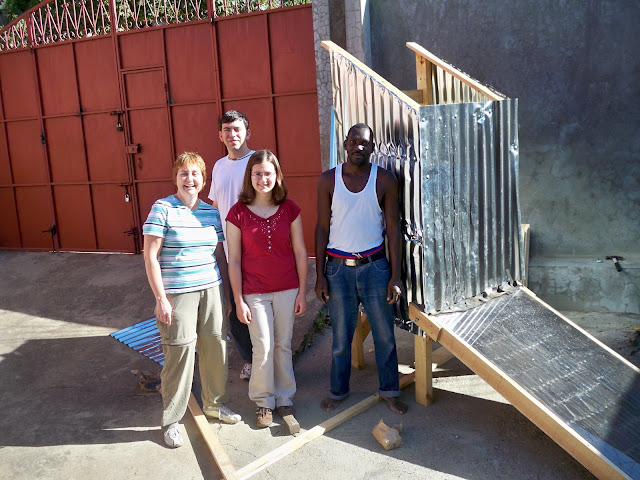
We're going to be working with some peanut experts that visited Cap Haitien recently to develop a cheap, simple drying structure that allows farmers to keep their peanuts out of the rain but still allows them to dry fast enough. Once we get a working prototype, we'll distribute the plans to farmers. This, combined with proper peanut drying and storage at the factory, should greatly reduce mold on the peanuts, and therefore the amount of peanuts thrown out at the factory.
Peanut Shell Charcoal
We're developing a way to make charcoal out of the waste peanut shells at the factory. They want to employ 1-2 people to make charcoal and sell on the street. Wood charcoal is the main cooking fuel for average Haitians. A large coffee can's worth of charcoal sells for about $0.60. By setting up this mini-business, MFK will employ 1-2 more people, and reduce demand for wood charcoal, which has wrecked Haiti's environment.
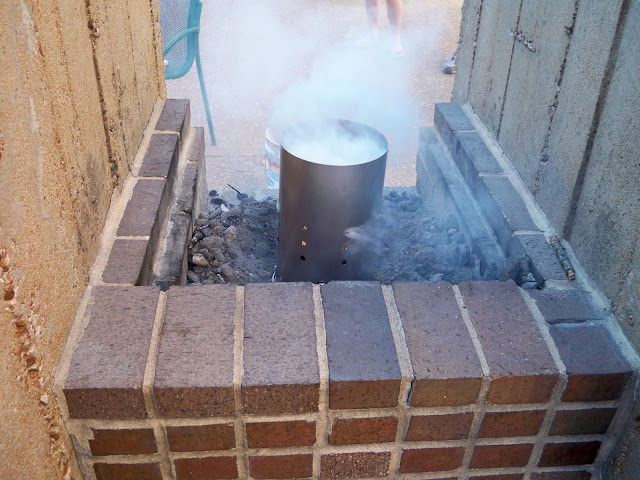
We put the peanut shells in the chimney, then light then with newspaper underneath.
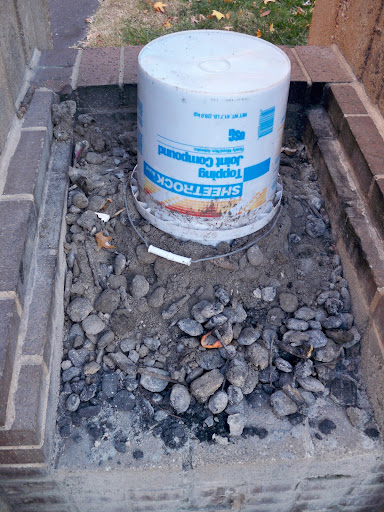
Then once it's burning well, we smother the fire with a bucket and let it cool down. This pyrolyzes (I think this is right) the peanut shells and just leaves simple carbon chains.
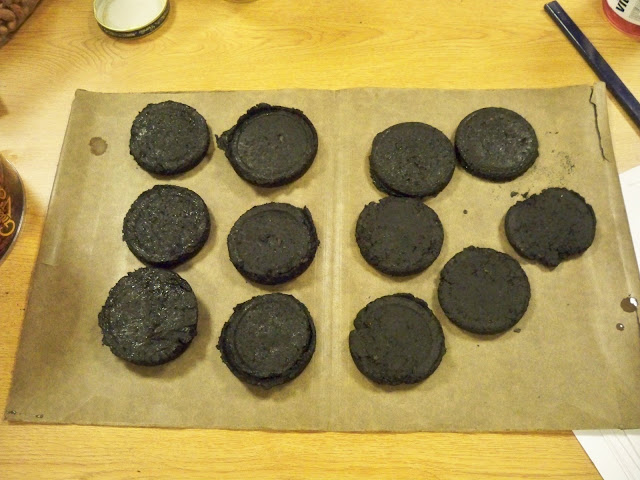
Then we use cooked tapioca flour goo to bind the charcoal fines together and compress them into these nifty briquettes!
A New Factory
MFK is planning on building a new factory, to be completed in 2011. Jim S, an engineer that's helping us out, is going to be helping them put together a construction schedule. We're going to help as much as well can.
A Solar Peanut Dryer
We built a solar peanut dryer last March at MFK's factory in Cap Haitien, Haiti. It doesn't work very well though. Costing about $400, it is too complicated to build, and too expensive for the amount of drying it can accomplish.
We're going to be working with some peanut experts that visited Cap Haitien recently to develop a cheap, simple drying structure that allows farmers to keep their peanuts out of the rain but still allows them to dry fast enough. Once we get a working prototype, we'll distribute the plans to farmers. This, combined with proper peanut drying and storage at the factory, should greatly reduce mold on the peanuts, and therefore the amount of peanuts thrown out at the factory.
Peanut Shell Charcoal
We're developing a way to make charcoal out of the waste peanut shells at the factory. They want to employ 1-2 people to make charcoal and sell on the street. Wood charcoal is the main cooking fuel for average Haitians. A large coffee can's worth of charcoal sells for about $0.60. By setting up this mini-business, MFK will employ 1-2 more people, and reduce demand for wood charcoal, which has wrecked Haiti's environment.
We put the peanut shells in the chimney, then light then with newspaper underneath.
Then once it's burning well, we smother the fire with a bucket and let it cool down. This pyrolyzes (I think this is right) the peanut shells and just leaves simple carbon chains.
Then we use cooked tapioca flour goo to bind the charcoal fines together and compress them into these nifty briquettes!
A New Factory
MFK is planning on building a new factory, to be completed in 2011. Jim S, an engineer that's helping us out, is going to be helping them put together a construction schedule. We're going to help as much as well can.
Subscribe to:
Posts (Atom)